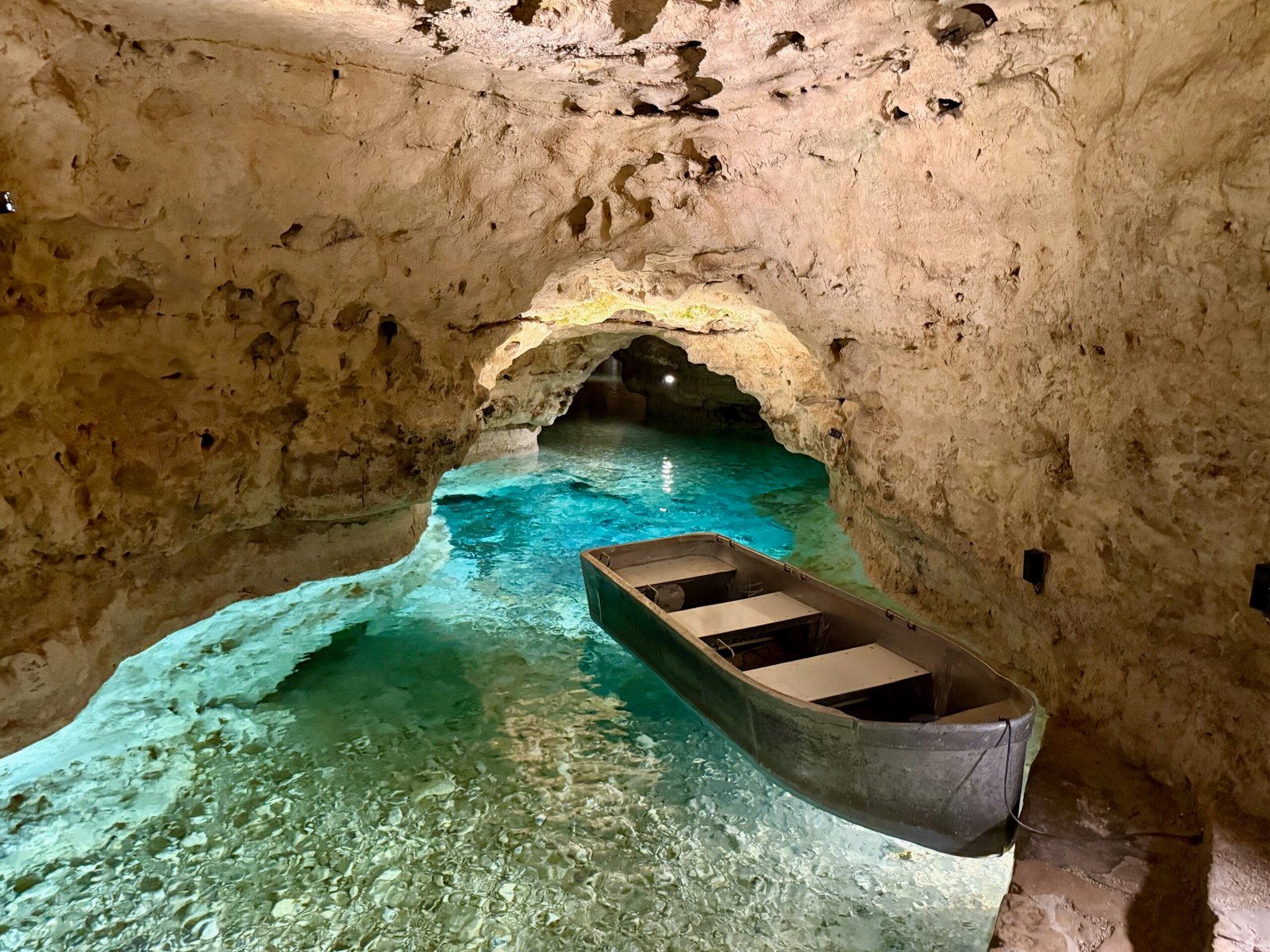
Beneath the quiet streets of Tapolca, Hungary, lies a surreal wonder: an underground river where visitors can paddle through glowing blue karst waters 20 metres below the town. On a scorching September day, I left Budapest behind to explore the Tapolca Lake Cave (Tapolcai Tavasbarlang), discovering not only a unique subterranean boat ride but also the science of how minerals, springs, and time carved this hidden world.
1 Tapolca Lake Cave: A Hidden World Beneath the Town
arrived in Tapolca on a scorching afternoon in early September, the air outside pressing at 33°C. After a three-hour ride from Budapest, stepping into the town felt like stepping into a quiet storybook with its narrow streets, tiled roofs, and ponds where koi glided lazily among the ducks. For those planning their own trip, staying overnight in town makes it easy to explore at a slower pace – see the latest Tapolca hotel options if you’d like to base yourself right near the cave.
The true wonder lay beneath my feet: the Tapolca Lake Cave, or Tapolcai Tavasbarlang.
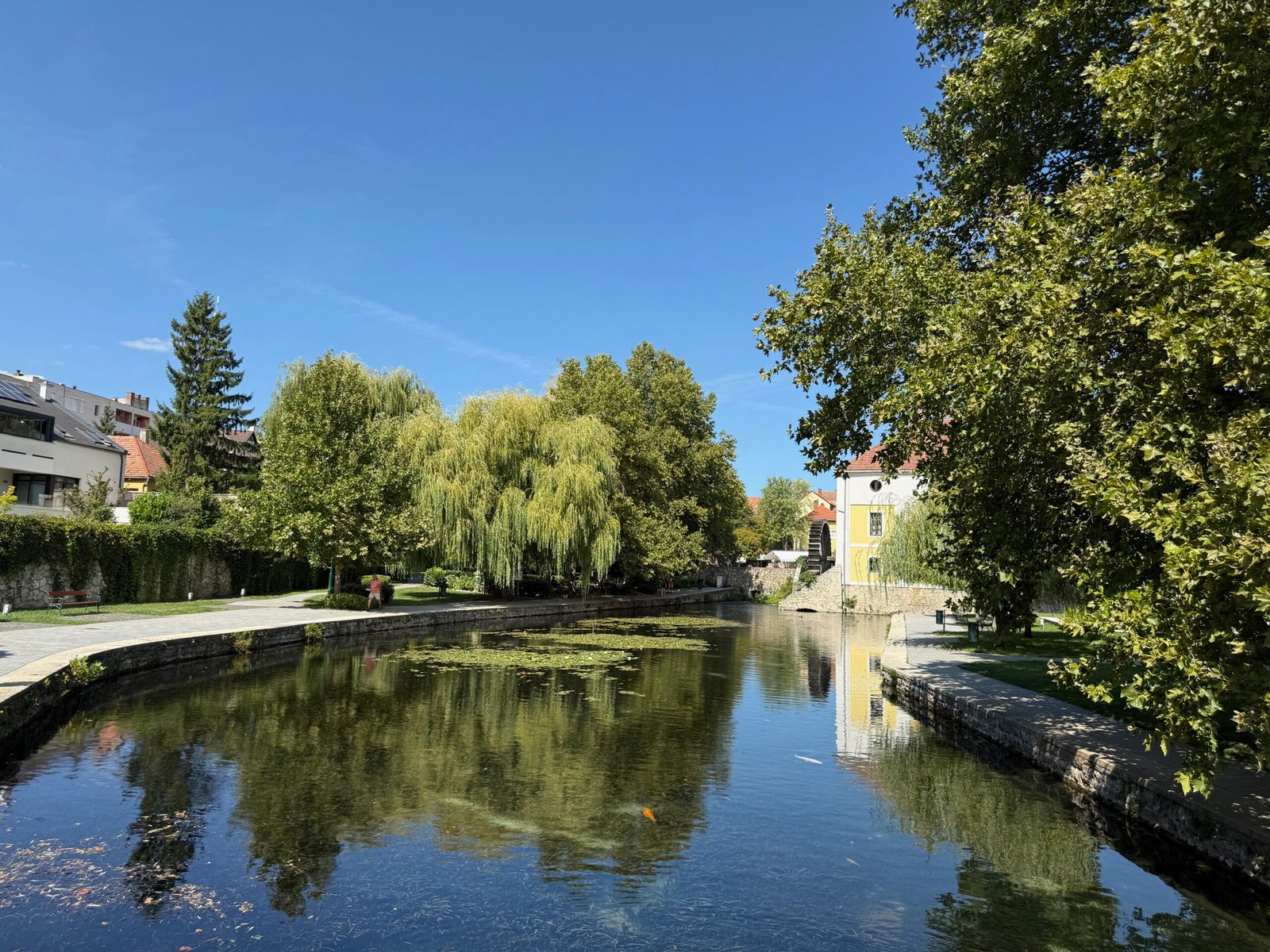
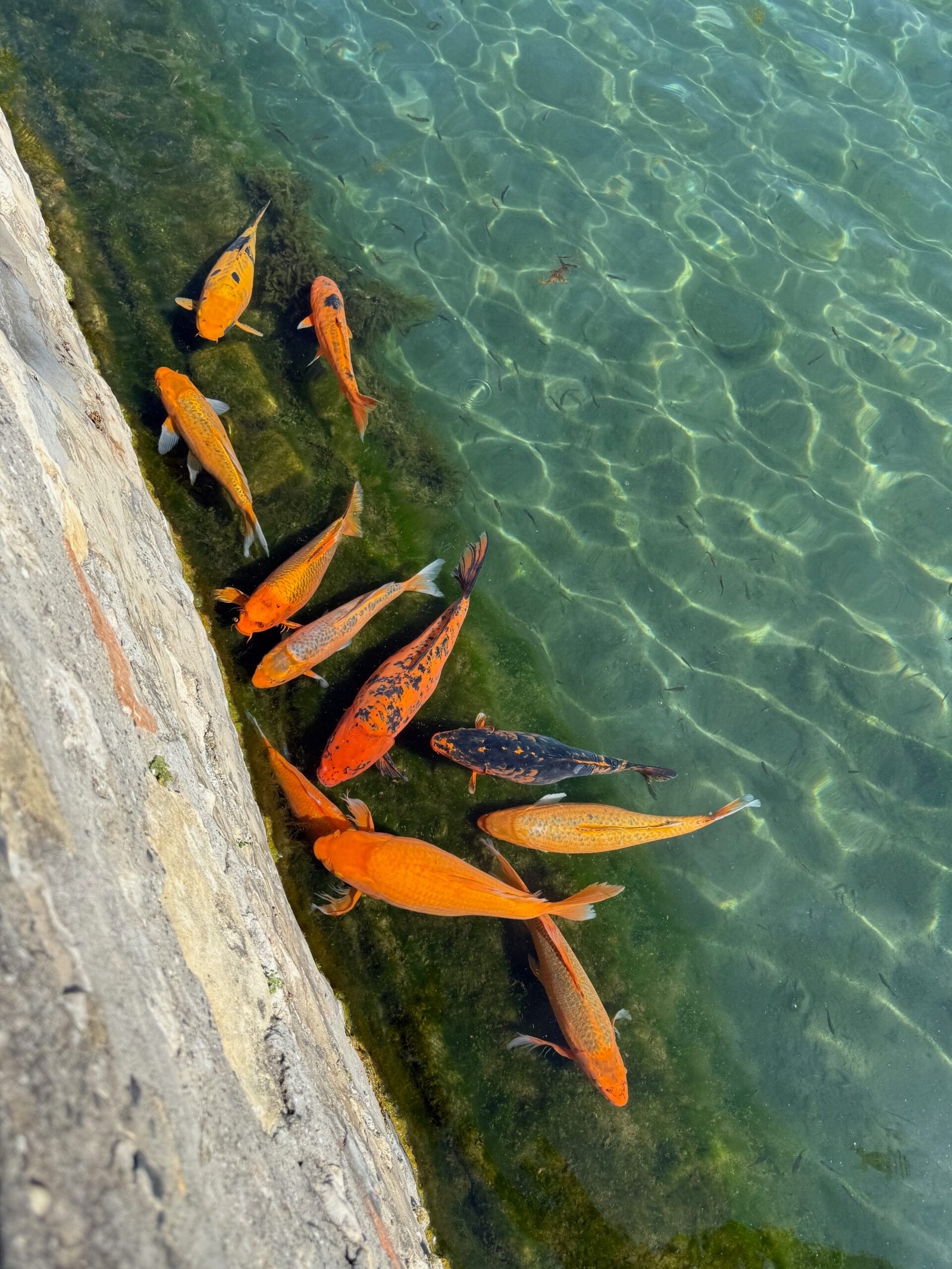
The spring that feeds Tapolca Lake Cave also fills the town’s peaceful ponds, home to koi and ducks.
At first glance, there’s little sign of the underground marvel below. The entrance is tucked discreetly in the town centre, part of a modern visitor centre and museum. If you didn’t know better, you might pass by without realizing an entire subterranean river winds through the limestone directly underfoot. But inside, the journey unfolds in two parts: first, through the museum, and then down into the earth itself.
2 Quick Facts About the Tapolca Lake Cave
- Location: Tapolca, Hungary – about 3 hours from Budapest, near Lake Balaton.
- Length: ~3 km (1.9 mi) long<, but only 300 m is developed for visitors.
- Depth: ~15–20 m (49 – 66 ft) beneath the town (about 73 steps down).
- Adventure: 15-minute underground boat ride through crystal-blue waters.
- Geology: Karst cave carved by groundwater dissolving limestone over millennia.
- Water: Spring-fed, mineral-rich, and a steady temperature year-round.
- Admission Fee: 5,000 HUF ($15 USD) per person. Entry includes an exhibition on karst landscapes, plus boat ride.
- Booking: Advance online reservations strongly recommended (time slots fill up).
3 The Geology of Tapolca Lake Cave
My timed ticket was for 1:40 pm – booking in advance is essential here, since showing up at the door can leave you disappointed. Before descending underground, all visitors begin in the museum, which surprised me with its depth.
Displays of glittering minerals, maps of Hungary’s karst landscapes, and detailed panels explained how groundwater, rich in carbonic acid, seeps through cracks in limestone, slowly dissolving it over millennia. This relentless chemical weathering is what carved out Tapolca’s passageways, eventually linking them to the hidden spring system I was about to see.
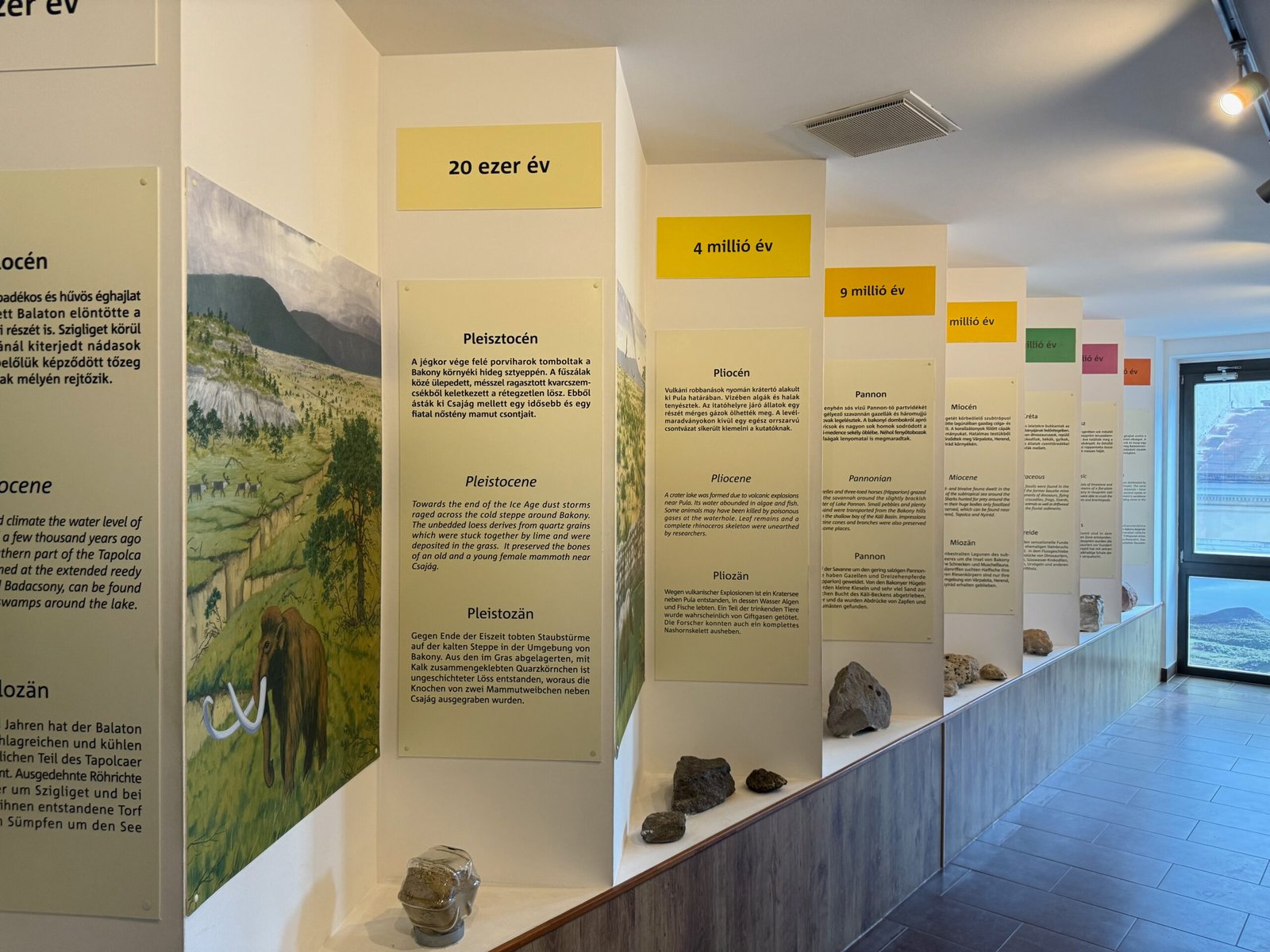
What struck me was how accessible the museum was. Every panel was translated into Hungarian, English, and German – a clear sign that Tapolca knows its audience: curious travelers from across Europe, eager to understand the science before venturing in.
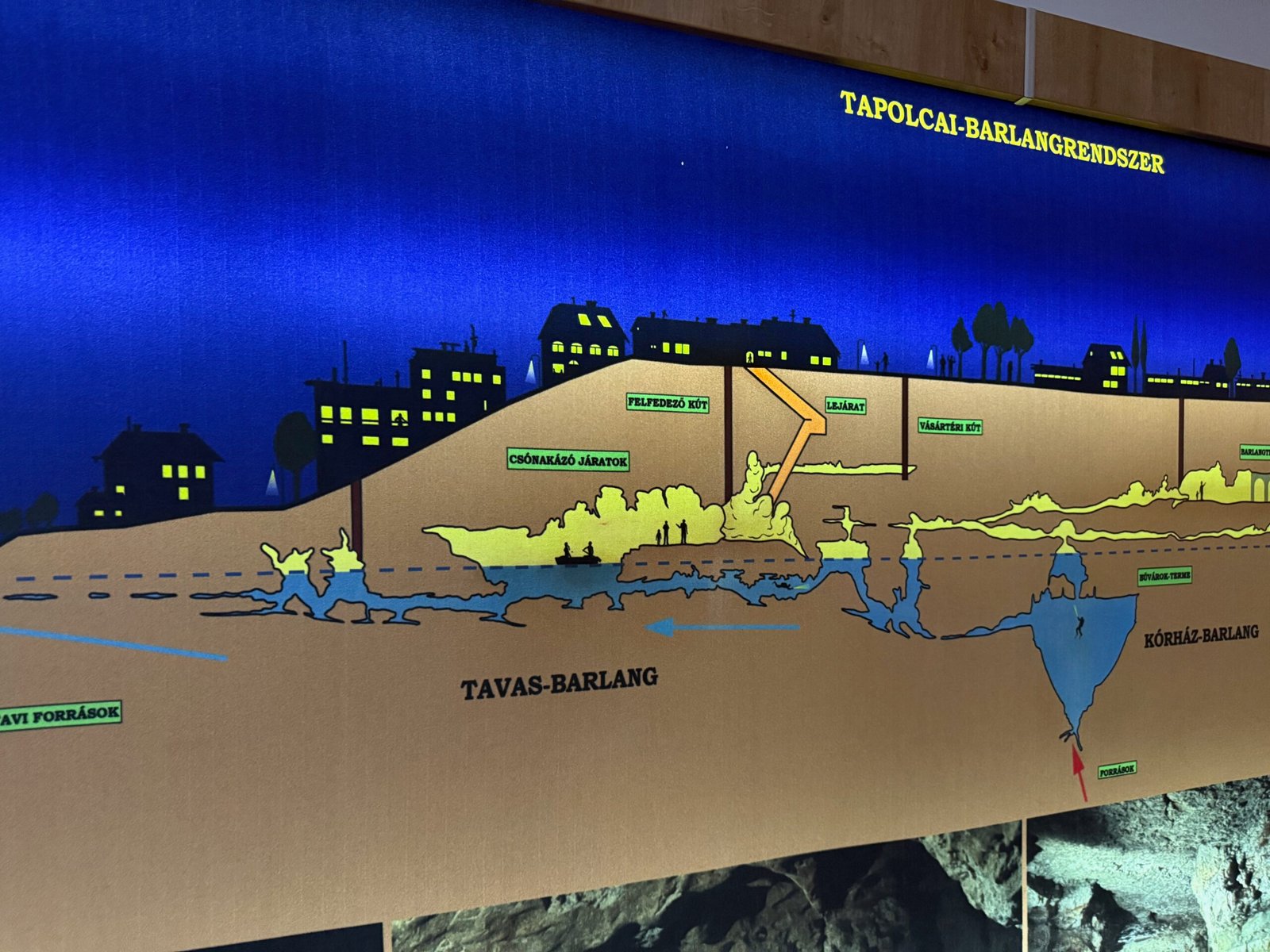
The geology here is part of the Transdanubian karst, carved from Triassic limestone deposited around 235–240 million years ago, when this part of Hungary lay beneath a warm shallow sea. Over millions of years, dripping water rich in carbonic acid sculpted the rock into a classic karst landscape – a world of sinkholes, springs, and underground rivers.
The Tapolca system alone stretches for more than 3 km (1.9 mi), though only a short section is open to the public. Still, knowing that most of the cave remained unexplored beneath the town gave me goosebumps.
4 The Descent Into the Karst
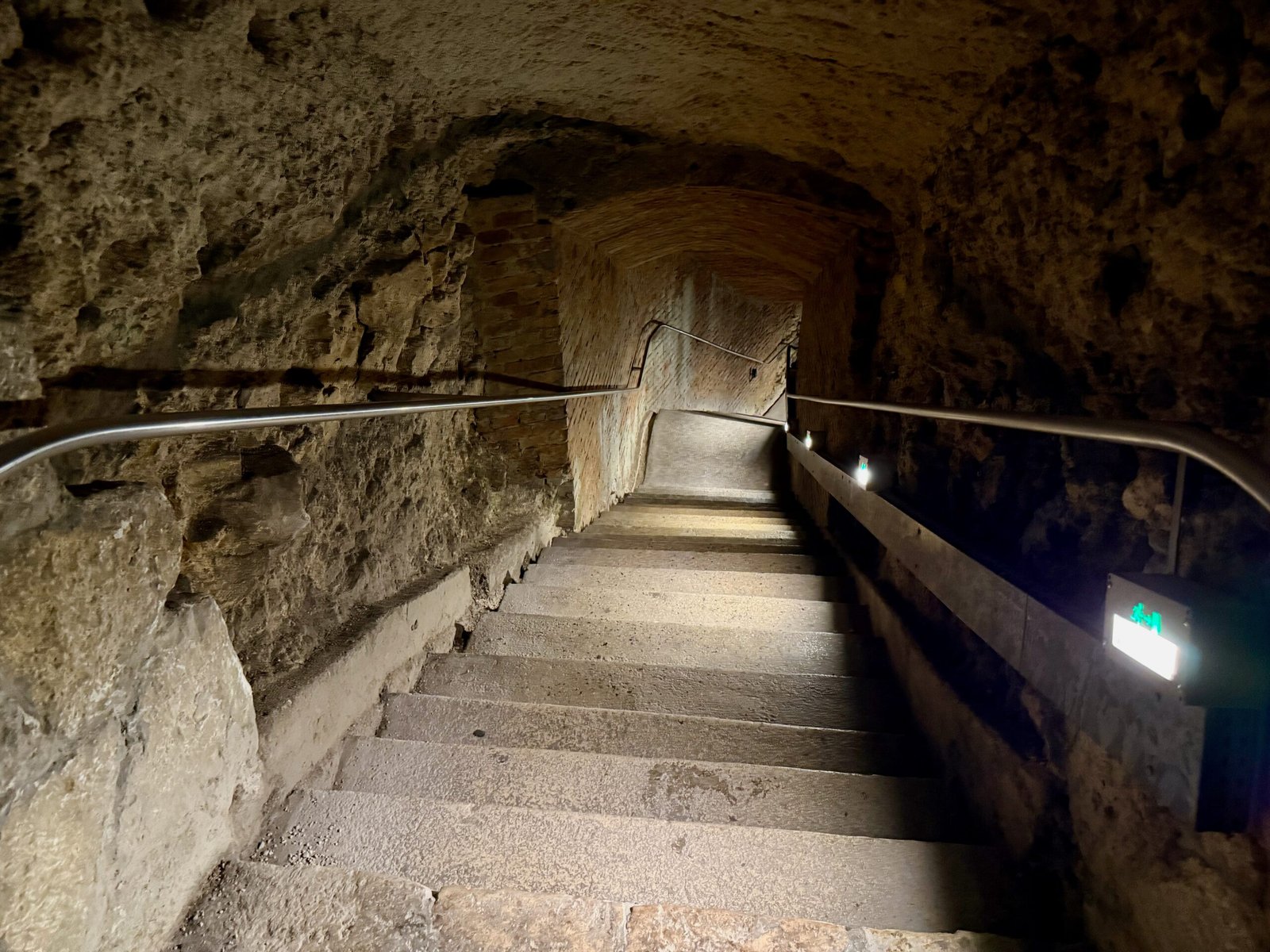
From the museum, a tunnel led downward, with cool air replacing the sticky heat of the day. The walls were pocked with small holes, some likely the marks of erosion, others perhaps old cavities where roots or even birds once made their homes. As the passage widened, it was like a curtain lifting: the underground lake revealed itself in a glowing blue shimmer.
5 The Spring Beneath Tapolca
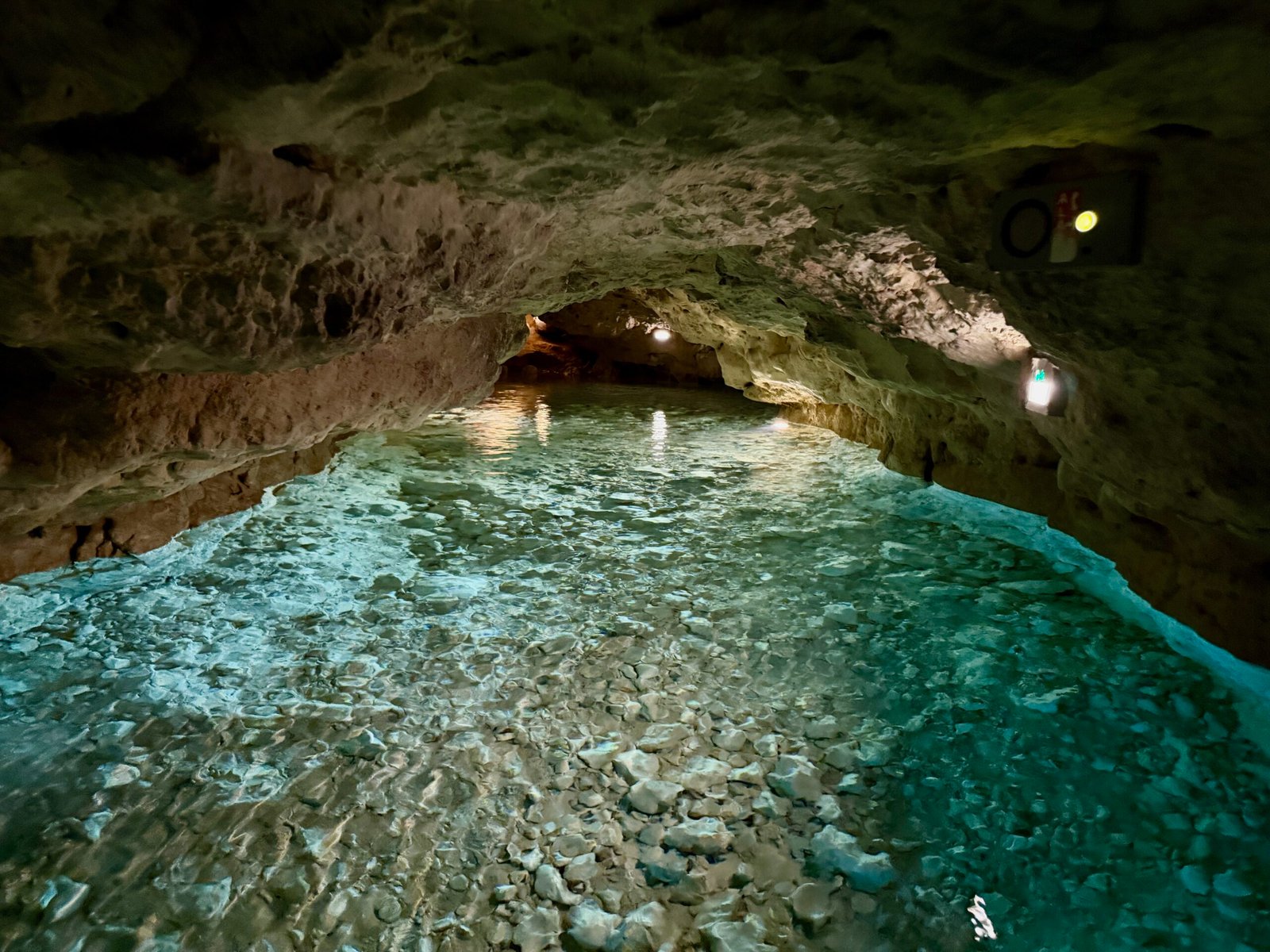
The moment I saw it, I understood why Tapolca Lake Cave is so famous. The river that flows here is fed by thermal karst springs, emerging from deep within the limestone. The water holds a steady 18 °C year-round, warmed slightly by geothermal energy.
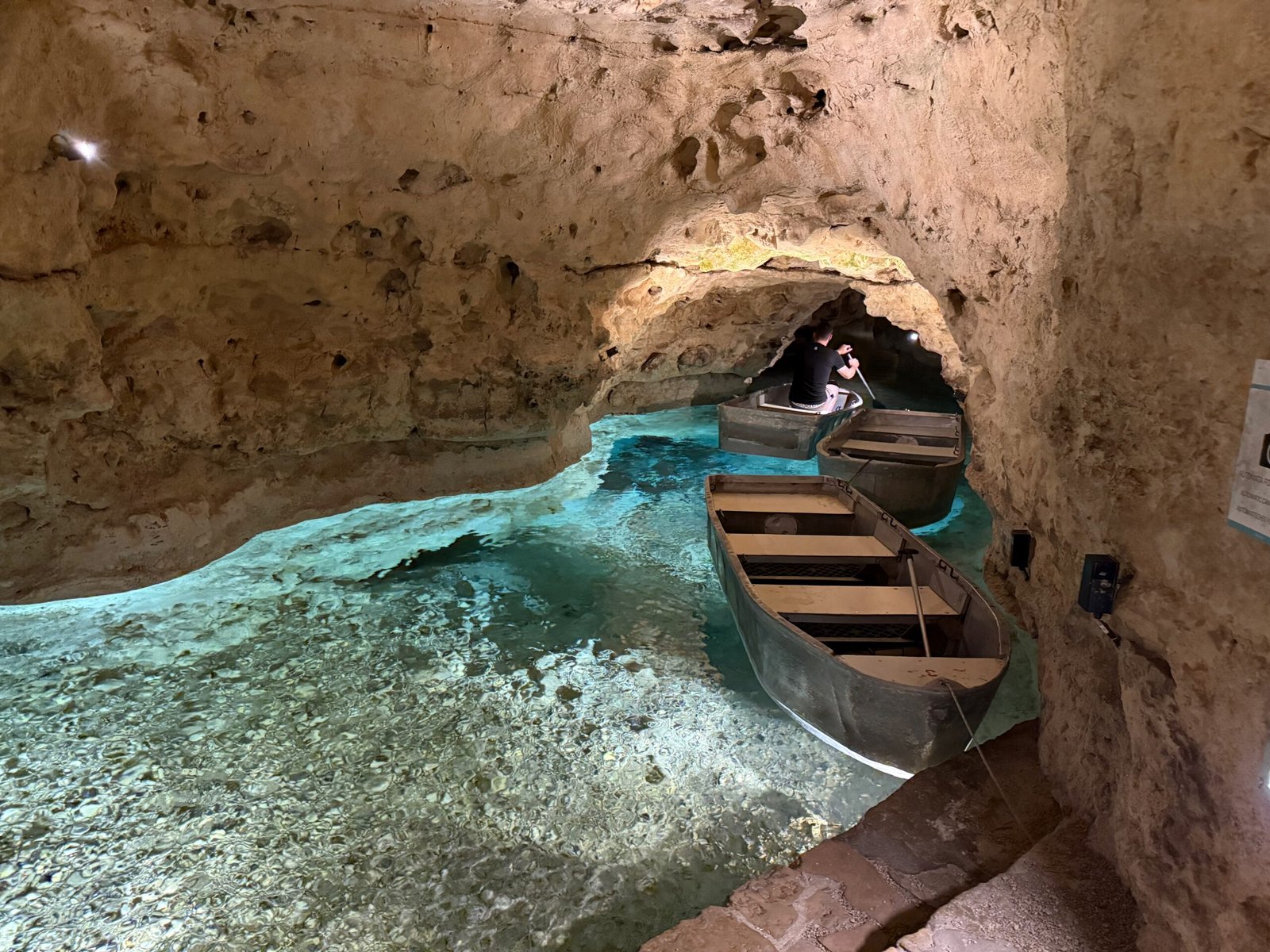
Above ground, the same spring feeds Tapolca’s town ponds, where koi drift lazily under willow trees and ducks paddle through the square. Realizing the clear, cool water beneath me was the same water keeping those ponds alive tied everything together – the cave and the town, above and below, one hidden system.
6 Paddling a Subterranean River
The water was the kind of blue you usually see in postcards from alpine lakes – clear, luminous, almost unreal. Boats lined the landing, each waiting for their turn to carry explorers into the glow. When my turn came, I climbed in, paddle in hand, and pushed off.
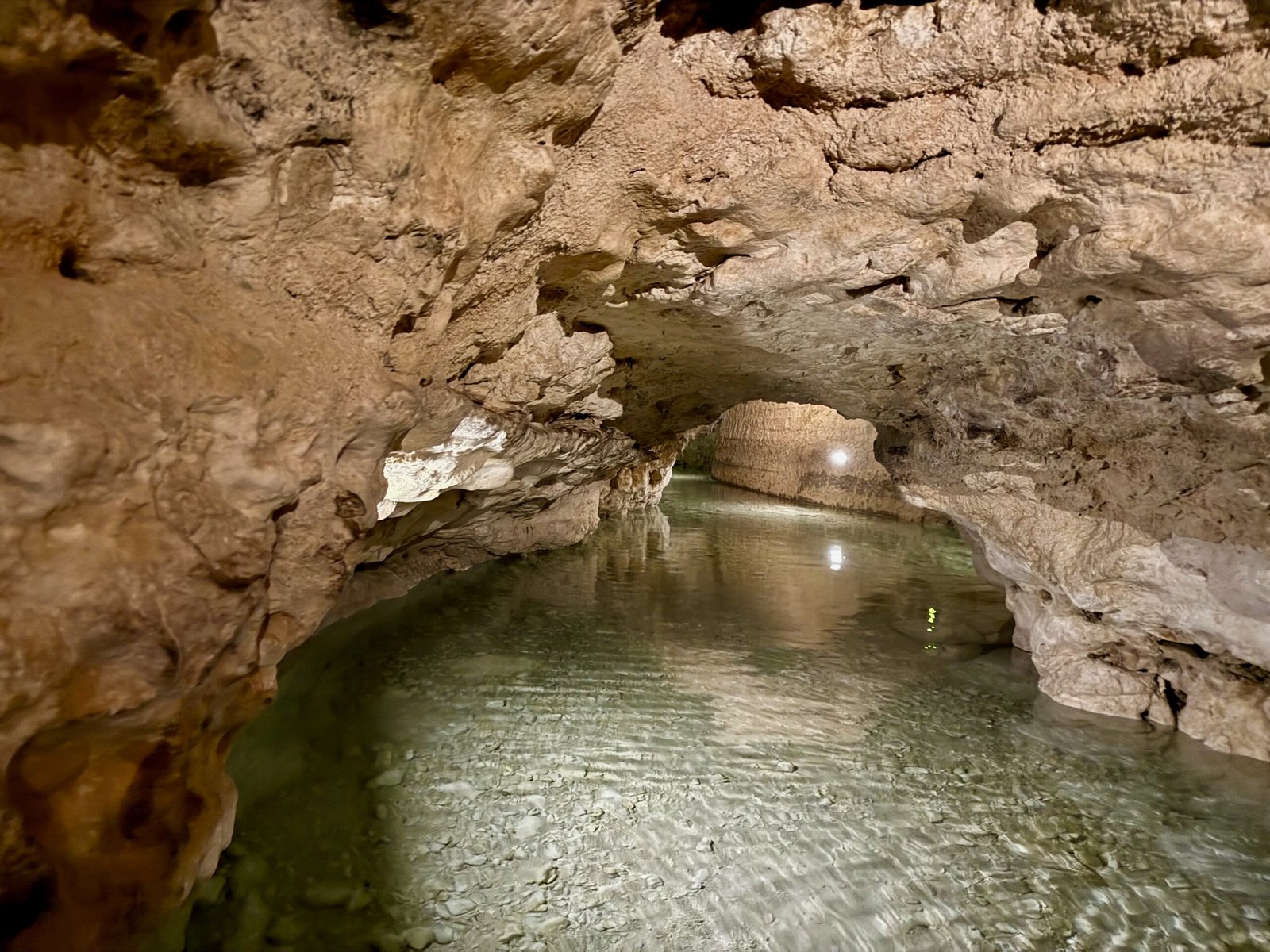
Steering was an adventure in itself. In the wider chambers, the paddle helped, but in the narrow sections the trick was to grip the smooth rock walls and pull yourself along. In some places, the ceiling dipped so low I had to duck to slide under. The cave was well lit, but not harshly, as lamps placed along the passage gave the water an otherworldly gleam, like liquid crystal.
The round-trip took about 15 minutes, looping through winding channels before returning to the start. Yet time in the cave seemed to stretch, as each chamber carried the hush of deep water and the weight of geological time.
7 The Science of Blue Water
As I paddled, I kept wondering: what gave the lake its extraordinary colour? The answer lies in the minerals. The underground spring water carries dissolved calcium carbonate and other trace minerals from the surrounding limestone. It’s also slightly alkaline, with a pH typically between 7.2 and 8.3, buffered by those same carbonates – a chemistry that helps keep the water so clear and stable.
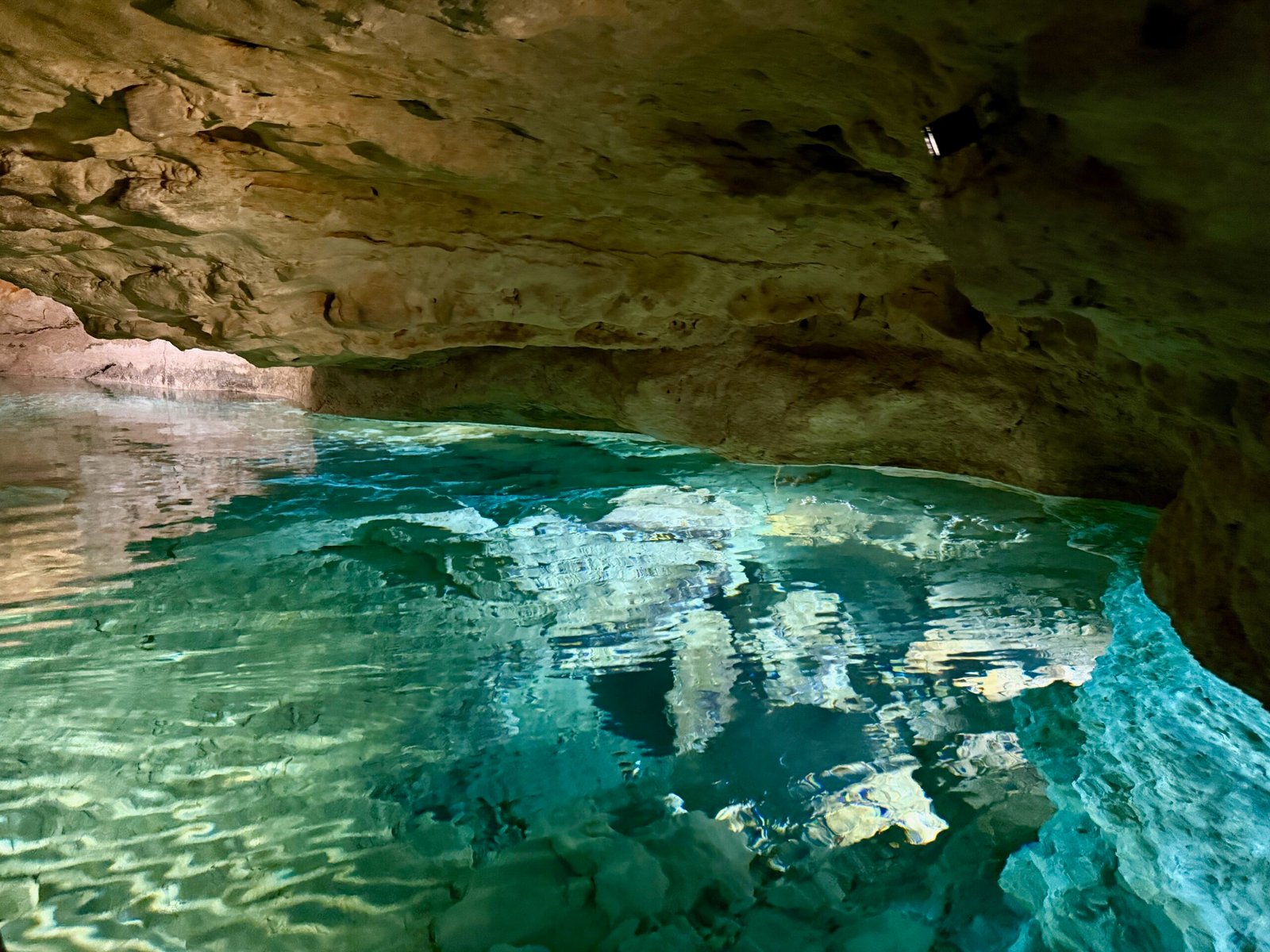
When light penetrates the water, shorter blue wavelengths scatter more strongly than reds and yellows, painting it with that unmistakable turquoise glow. The effect is so striking that it feels less like paddling through a cave and more like drifting across liquid light.
8 You Might Also Like:
- Palvolgyi Cave: Explore Hungary’s Longest Cave – Journey into Budapest’s fossil-rich limestone labyrinth and discover the deep-time geology that shaped Hungary’s largest cave system.
- Li River: Explore the Science and Beauty of China’s Iconic Gem – Cruise through China’s legendary karst landscape and uncover the geology and natural forces behind one of the world’s most breathtaking river valleys.
- Cappadocia Hot-Air Balloon: Sunrise in a Sky of 100 Balloons – Float above Cappadocia’s fairy-chimney valleys at dawn and witness the volcanic tuff landscape glow beneath a sky filled with colorful balloons.
9 A Brief History of Tapolca Lake Cave
Tapolca Lake Cave isn’t just a natural wonder; it has a human story too. The cave was discovered in 1903, when locals were digging a well and accidentally broke into the chambers. Within a decade, in 1912, part of the cave was opened to the public, making it one of the first places in Hungary where visitors could actually boat underground.
Over the years, new sections were explored, and in 2010 a modern visitor centre and museum were added, turning the site into a hub for science travelers. Today, the cave is protected as a Hungarian nature conservation area. Its uniqueness lies in its setting: a karst cave system that flows directly beneath an inhabited town.
10 A Contrast in Caves
This wasn’t my first Hungarian cave. The year before, I had explored Palvolgyi Cave (Pál-Völgyi Barlang) in Budapest, which is a vast fossil-rich limestone labyrinth, impressive in its own right. But Tapolca was different. Pál-völgyi felt like walking through stone’s memory, corridors etched over millions of years. Tapolca felt alive, a river still flowing, carving, reshaping the earth beneath the town.
For me, it was also a first: my first time navigating a true subterranean lake. The blend of science and experience – the geology explained above ground, then embodied below, left me both informed and awed.
11 Practical Tips for Visiting Tapolca Lake Cave
Here’s what I learned from my visit that will make your trip smoother and more enjoyable.
- Book in Advance: Timed tickets sell out quickly, especially in summer. Reserve online to avoid disappointment.
- Travel Time: Tapolca is about 3 hours from Budapest by train or car; plan for a full-day trip.
- Timing your Visit: The underground boat ride itself lasts ~15 minutes, but allow at least 1–1.5 hours to enjoy the museum and explore Tapolca’s town ponds.
- What to Bring: Comfortable shoes for walking down (around 73 steps), and a light sweater – it’s a steady 18 °C underground, even on hot days.
- Accessibility: Most of the museum is accessible, but the cave descent and boat ride are not wheelchair-friendly.
- Photography: Flash is restricted in some areas, but the cave lighting is excellent for photos of the glowing water.
12 Pro Tips for Science Travelers
If you’re like me and love to see the science behind the scenery, these details will help you appreciate the cave on a deeper level.
- Geology Lens: Notice the pockmarked walls on the descent – small erosional cavities that show how carbonic acid-rich water dissolved the Triassic limestone.
- Hydrology Connection: The same spring that feeds the cave also fills the ponds above ground in Tapolca’s town square. Spot the koi and ducks there to see the system in action.
- Comparative Caves: If you’ve visited Palvolgyi Cave in Budapest, compare its fossil-rich corridors with Tapolca’s flowing, “alive” karst river, which are two different faces of Hungarian limestone.
13 FAQs About Tapolca Lake Cave
Is Tapolca Lake Cave really under the town?
Yes! The navigable lake lies about 20 m (65 ft) below the streets of Tapolca’s town square, carved in Triassic limestone. Above ground you’ll see koi-filled ponds that are part of the same spring system.
How long is the Tapolca Lake Cave?
The Tapolca Lake Cave system is about 3 km (1.9 mi) long in total, but only a short section of roughly 300 metres is developed for visitors. It takes about 15 minutes to paddle through the cave section open to visitors.
How deep is the water, and can you fall in?
The underground river is mostly 1–3 m (3–10 ft) deep. Visitors remain in stable aluminum boats and there’s no wading or swimming allowed.
What is the water temperature and pH?
Fed by thermal karst springs, the water stays a steady 18°C (64°F) year-round. It’s slightly alkaline, with a pH of 7.2–8.3, thanks to dissolved calcium carbonate – one reason it looks so clear.
Why is the water turquoise blue?
Mineral-rich spring water scatters light: short blue wavelengths bounce back while reds and yellows are absorbed, giving the river its glowing turquoise hue.
How old is the cave?
The limestone was laid down in a shallow tropical sea around 235–240 million years ago (Triassic Period). The hollowing of the cave began millions of years later as acidic groundwater dissolved the rock.
When was the cave discovered and opened to visitors?
The lake section was discovered in 1903 during well-digging. After exploration, it opened to the public for boat tours in 1912, making it one of Europe’s earliest show caves with boating.
Is the cave open all year?
Yes. The underground climate is stable, making it a pleasant visit in summer heat or winter cold. Boats operate year-round except during rare maintenance closures.
What is the admission fee for Tapolca Lake Cave?
The standard admission fee is 5,000 HUF (about $15 USD) per person. The ticket includes entry to the museum’s karst-landscape exhibition as well as the underground boat ride through the cave.
Do I need to book in advance?
Absolutely. Timed-entry tickets often sell out, especially on weekends and holidays. Book online or at the visitor-centre kiosk ahead of time.
14 Emerging Back Into the Sun
When I resurfaced, blinking into the afternoon light, the heat was still there, shimmering above the cobblestones. Yet I carried with me the cool stillness of the cave, the memory of blue water flowing quietly in the dark.
Tapolca may not be on every traveler’s radar, overshadowed by Lake Balaton’s beaches or Budapest’s grandeur. But for those with a love of science and a taste for adventure, the Lake Cave is a marvel worth seeking out – a chance to paddle through Earth’s hidden architecture and touch, if only briefly, the deep processes that shape our world.
Some links in this story are affiliate links. If you choose to buy through them, Curious Don may earn a small commission – at no extra cost to you. It helps support more science travel stories like this.