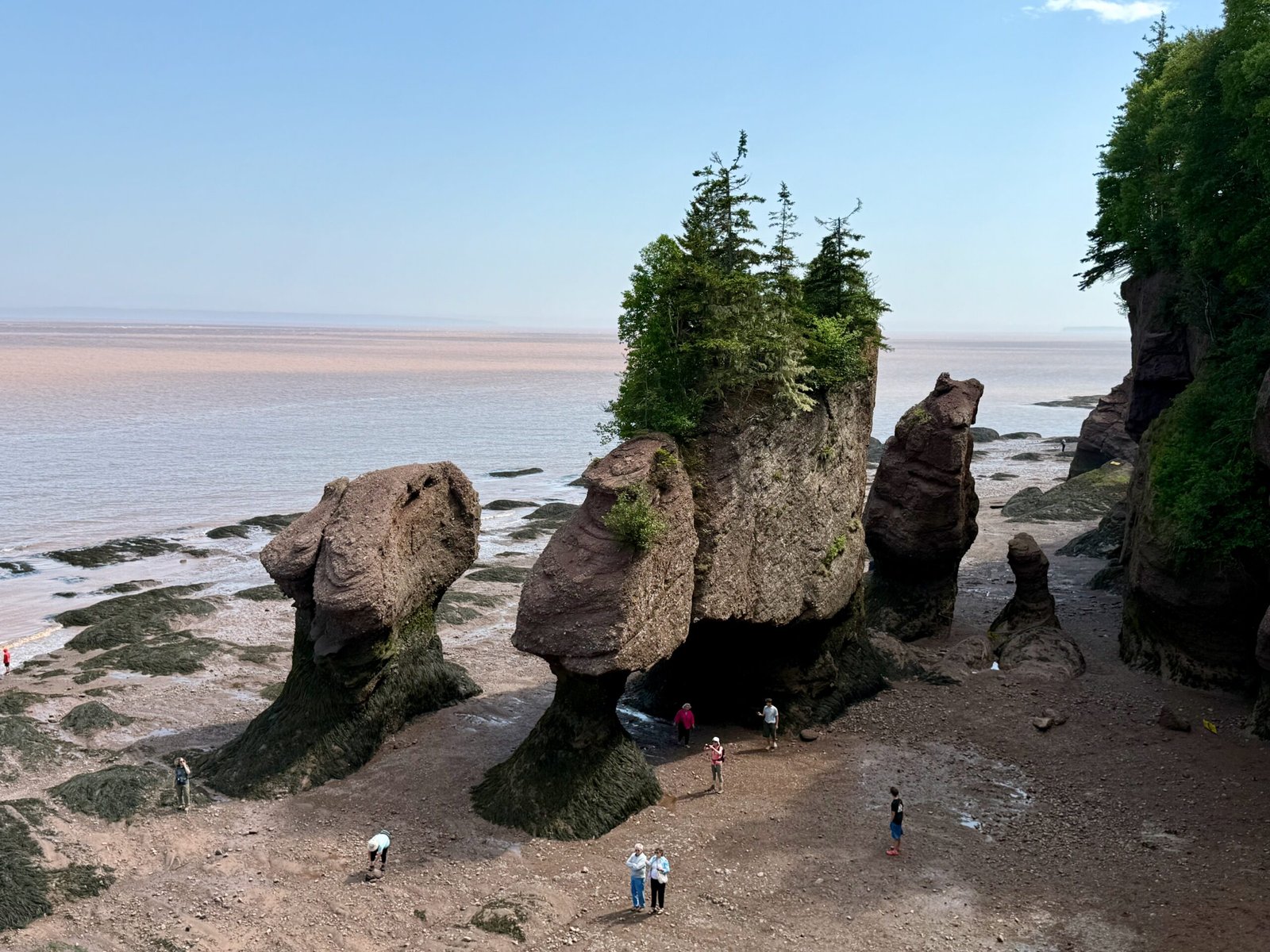
In New Brunswick’s Bay of Fundy, the Hopewell Rocks tides transform the coastline twice a day, carving towering sea stacks, revealing the ocean floor, and reminding us of the relentless power of nature. On a warm June afternoon, I returned to walk among these geological wonders, explore the science behind them, and experience the awe of standing where the ocean usually reigns.
1 Experiencing the Hopewell Rocks Tides Again
Standing at the edge of the Bay of Fundy, you quickly realize that time and tide are relentless sculptors. At the Hopewell Rocks, their combined force has carved ancient stone into towering shapes, each one a monument to millions of years of change shaped by the world’s highest tides.
On a warm June afternoon, I set out from Saint John for a day trip to Moncton. With extra time once my errands were done, I turned south to experience the Hopewell Rocks tides at low tide – standing on the exposed ocean floor among the strange and beautiful formations sculpted by the Bay of Fundy.
It had been ten years since I last visited, but I still remembered the feeling of walking beneath those towering rocks, looking up at their narrow, eroded bases and wondering how something so delicate could also feel so permanent. This time, I returned with a deeper curiosity, eager not just to see them again, but to understand the science behind the tides that continue to shape the Hopewell Rocks.
2 Quick Facts
- Location: Hopewell Rocks Provincial Park, New Brunswick, Canada
- What it is: Towering conglomerate sea stacks shaped by the world’s highest tides
- Tide difference: Up to 15 metres (50 feet) between high and low tide
- Best time to visit: At low tide – check tide charts before going
- Distance from Moncton: ~35 minutes by car
- Admission: ~$14–16 CAD adults, discounts for residents & kids
- Hours: Mid-May to mid-Oct., ~9 AM–5 PM (longer in summer)
3 The Ocean Waits for No One
The first rule of visiting the Hopewell Rocks is simple: check the tides.
In the Bay of Fundy, the tides rise and fall up to 15 metres (50 feet) every day, flooding and emptying the bay with astonishing force. If you arrive at the wrong time, you’ll find nothing but a wall of water; if you arrive when the tide has retreated, you can step onto the seabed itself, a place normally hidden beneath the waves.
That morning, I checked the tide tables and felt a thrill of luck when I saw low tide would align with my anticipated arrival around 3 PM. The timing was perfect, as the ocean floor would be exposed, and I’d have hours to explore before the sea crept back in.
The drive from Moncton to the park took just under 35 minutes, but the landscape seemed to change as I got closer: rolling hills gave way to the soft smell of salt and spruce, and the air grew heavier with anticipation.
4 Into the Forest
After paying my admission fee (with a small but appreciated New Brunswicker discount), I paused briefly at the visitor centre. Inside was a compact museum, full of displays explaining the park’s history, geology, and the astonishing mechanics of the tides. But I didn’t linger – not yet. The tide waits for no one.
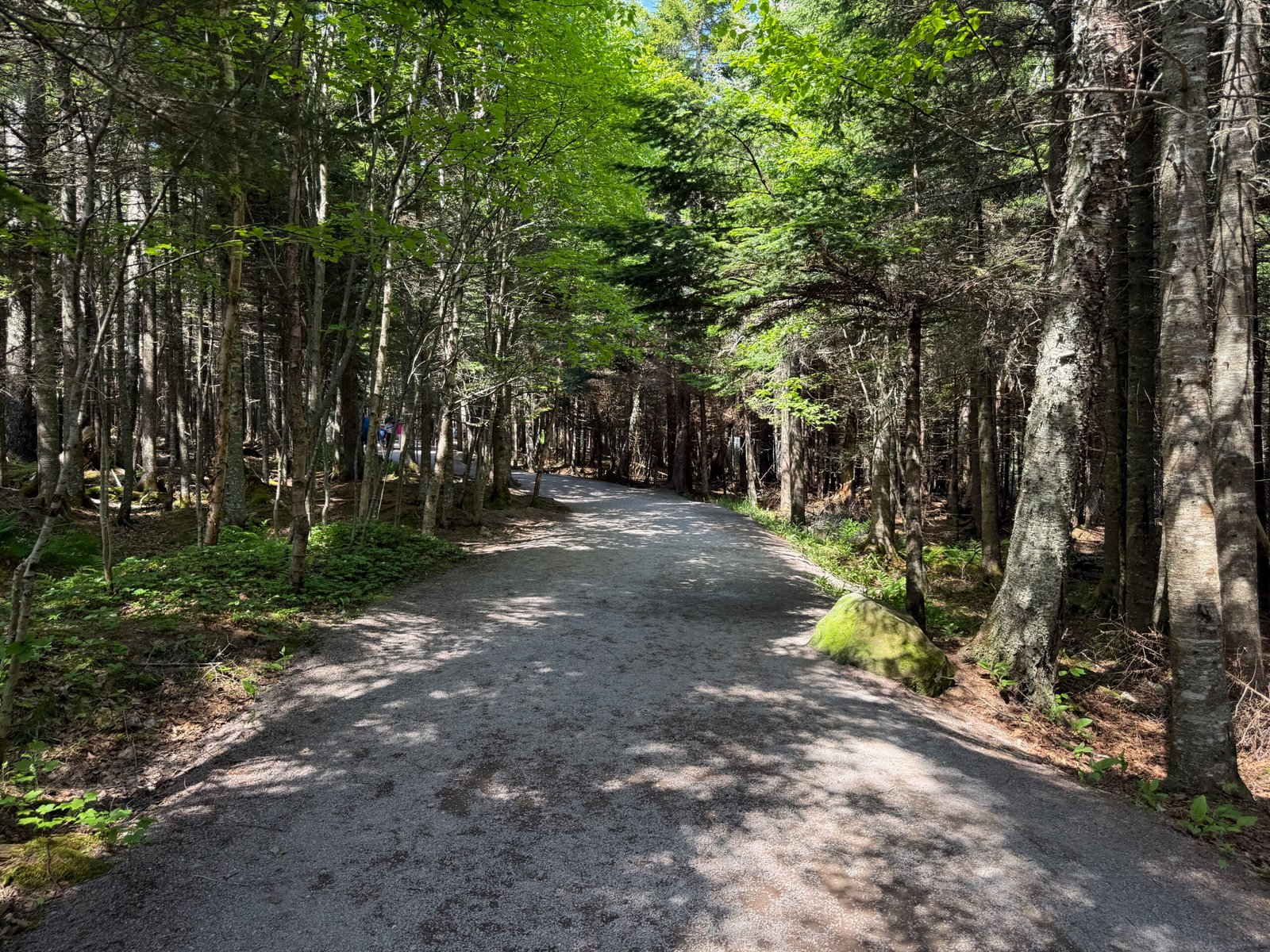
The path to the beach begins here, winding about a kilometre through a lush Acadian forest. I walked slowly, letting the trail prepare me for what was to come. The forest felt alive with bird songs above, the faint scent of spruce in the air and the distant sound of water somewhere ahead.
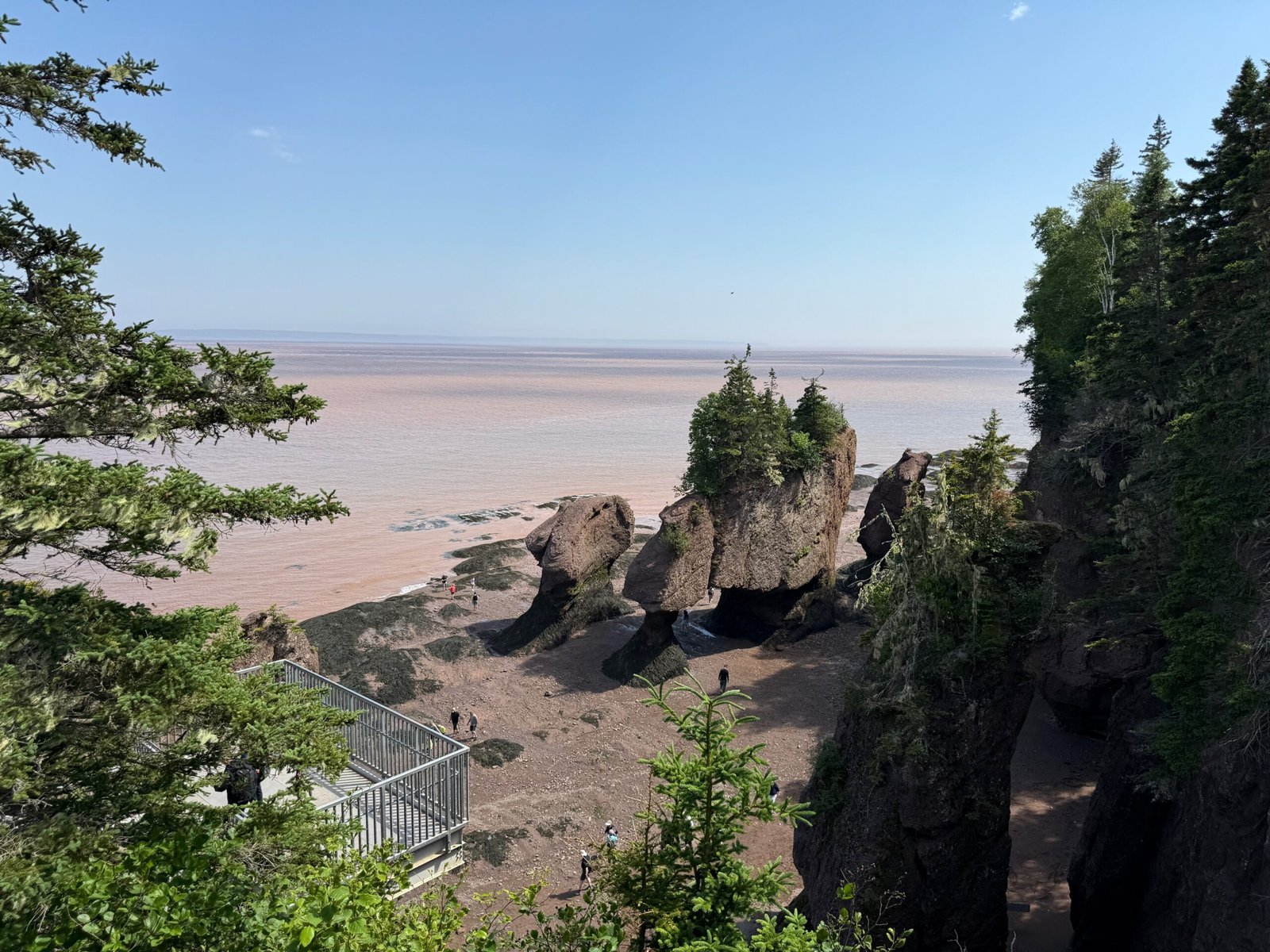
Through the trees, I caught my first glimpse of the strange, towering formations ahead. Before stepping down to the beach, I paused to reflect on how these incredible rocks were formed over millions of years.
5 How Were the Hopewell Rocks Formed?
The story of the Hopewell Rocks begins roughly 300 million years ago, during the Late Carboniferous to early Permian Periods, when this area lay at the edge of a vast river delta. Over millions of years, rivers carried sand, gravel, and stones from the ancient Caledonia Mountains into the basin, depositing thick layers of sediment. These sediments were buried, compressed, and cemented into the reddish-brown conglomerate rock you see today.
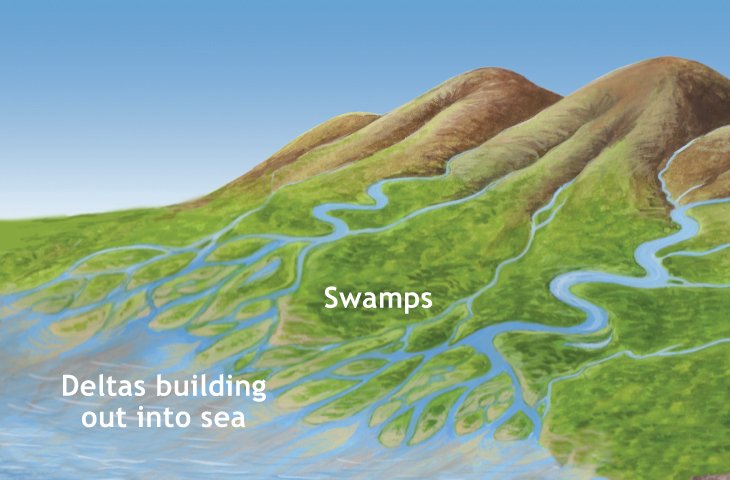
Much later, tectonic forces uplifted the region, exposing the ancient delta deposits to the elements. Then the relentless action of the Bay of Fundy’s tides – the highest in the world, began carving away at the cliffs. Over thousands of years, the softer material at the base was eroded by waves and ice, sculpting the narrow-necked “flowerpot” sea stacks that make the Hopewell Rocks so iconic.
It’s worth noting that the rocks here come from a different chapter of Earth’s history than the nearby Joggins Fossil Cliffs in Nova Scotia, just across the bay. The Joggins cliffs expose rocks from the Coal Age (about 310–315 million years ago), famous for their fossils of ancient forests and early reptiles. In contrast, the Hopewell Rocks were deposited slightly later and in a different environment – a river delta rather than a swampy coal forest, which explains why fossils are rare here compared to Joggins.
Even today, the Hopewell Rocks continue to evolve, slowly shaped by the ceaseless rhythm of the tides and time.
6 History of the Hopewell Rocks
Long before they became a tourist destination, the Hopewell Rocks were known to Indigenous peoples and early European settlers. By the late 1800s, around 1885, they began appearing in postcards and photography collections, sparking curiosity far beyond New Brunswick.
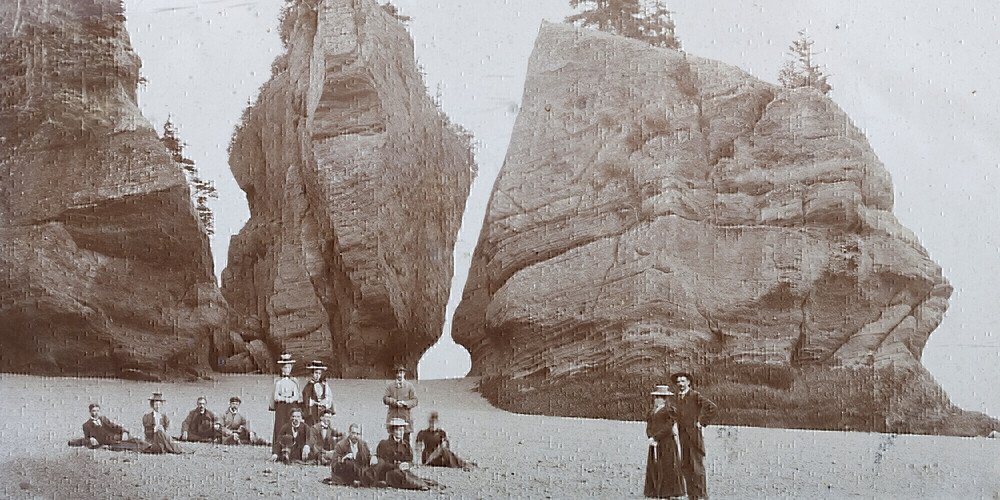
The site gained official protection in 1958, when 120 hectares were designated as The Rocks Provincial Park to preserve its dramatic sea stack formations sculpted by the Bay of Fundy’s tides. In 2012, it was renamed Hopewell Rocks Provincial Park to better highlight its geological and touristic significance.
In 2007, the park became part of the Fundy Biosphere Reserve, a UNESCO-recognized initiative dedicated to safeguarding the region’s biodiversity and geological heritage. Conservation efforts remain ongoing. For example, when a large section of the iconic Elephant Rock collapsed in 2016 – a vivid reminder that erosion never rests, and park staff adjusted visitor access to ensure safety while allowing continued enjoyment of the site.
Today, Hopewell Rocks is carefully managed with tide-based visitor schedules, maintained trails, and interpretive displays that help connect scientific understanding with the awe of standing on the ocean floor.
7 Walking on the Ocean Floor
I descended the staircase quickly, feeling that familiar thrill as my feet sank into the soft, muddy seabed.
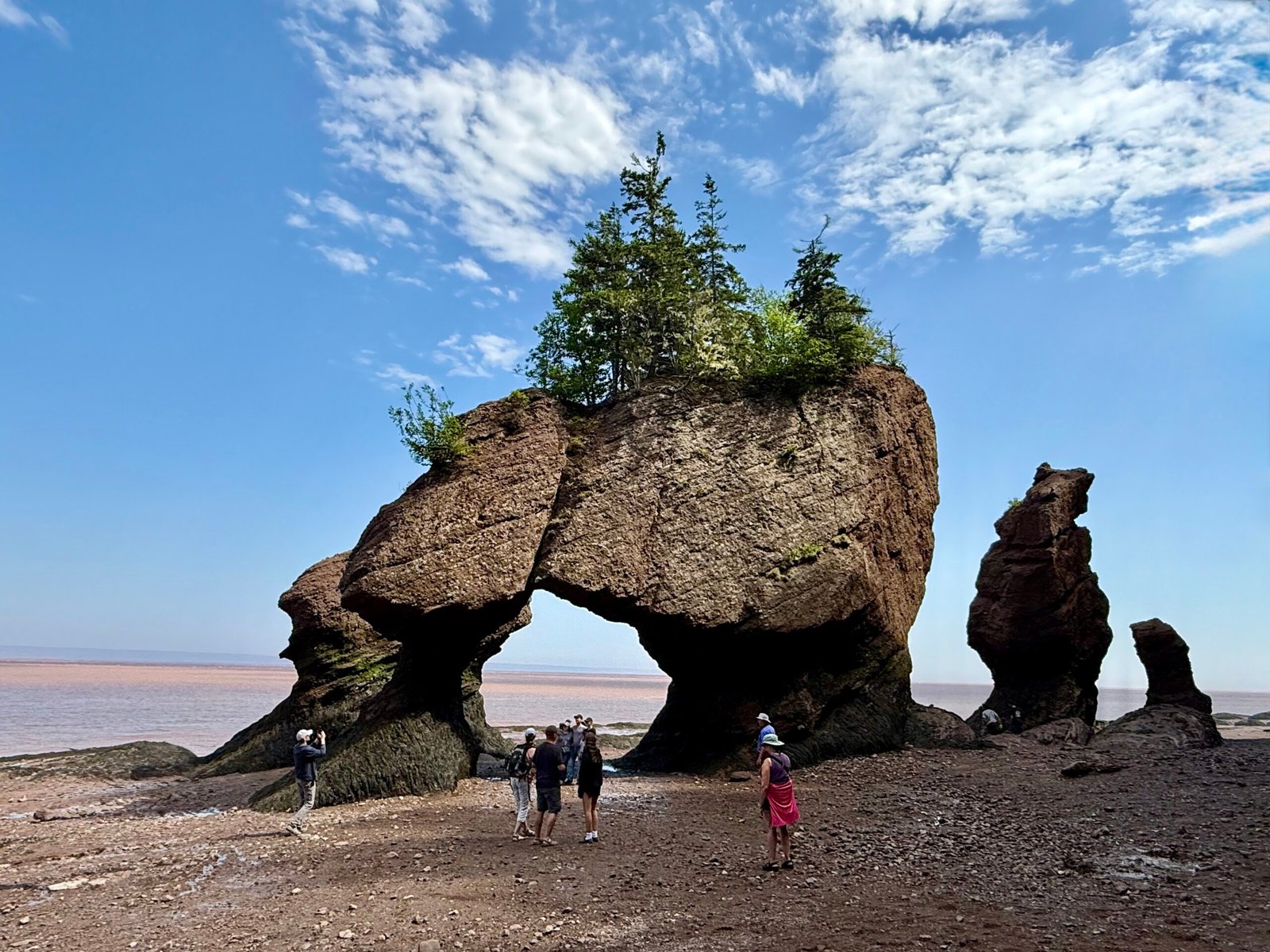
It’s hard to describe the sensation of standing on the ocean floor – the ground is firm but somewhat squishy beneath your feet, the air heavy with salt and earth, and the towering walls of rock rising like sentinels all around. You can feel the tide in your bones, even when it’s far away, a quiet reminder that you’re only borrowing this place for a little while.
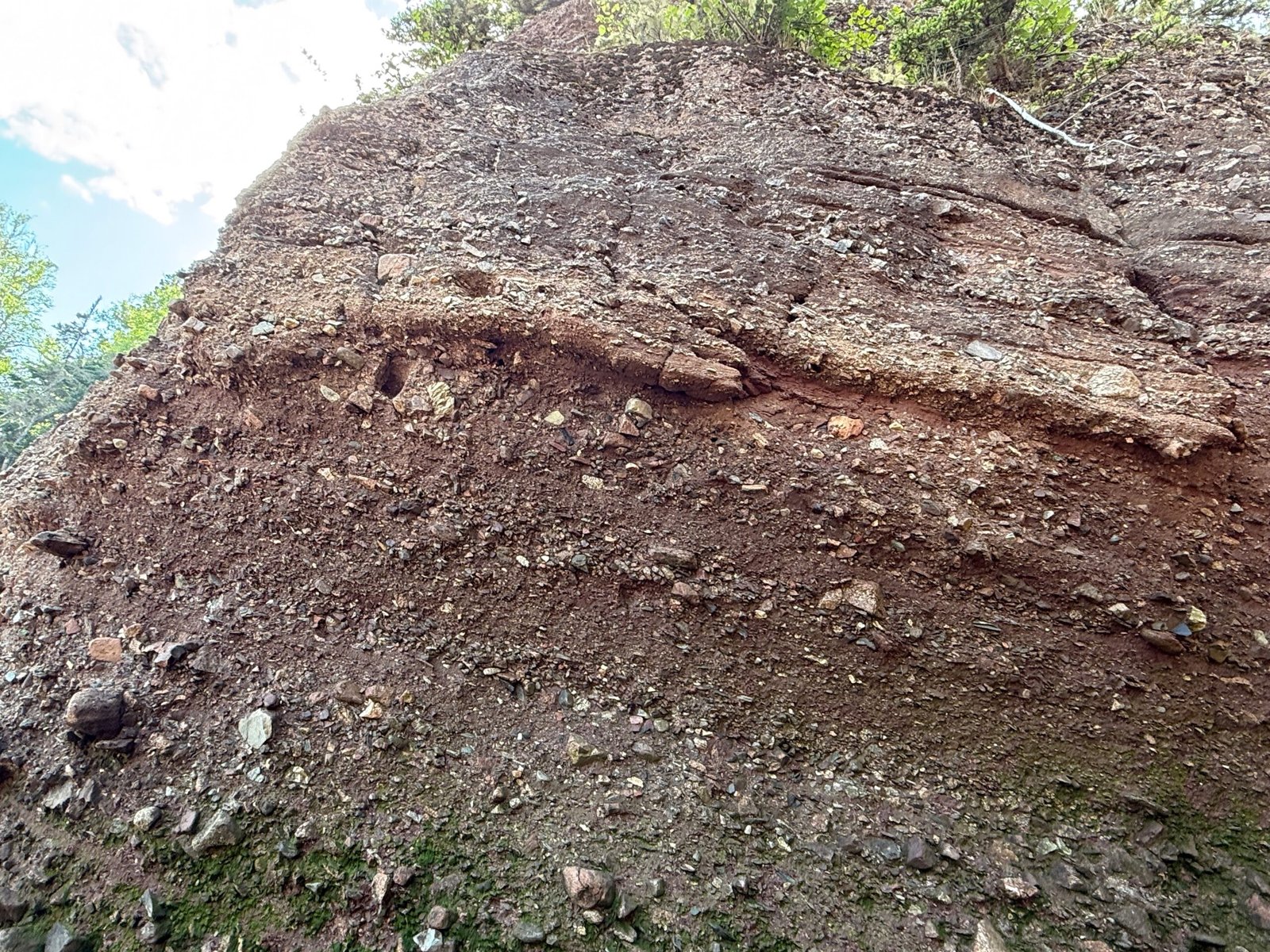
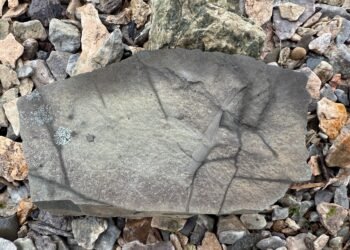
Up close, the rocks are even more impressive. Their narrow, sculpted bases and broad, crowned tops make them seem impossibly delicate yet ancient. As I ran my hand along the rough surface, I felt the embedded stones and layered textures, a tangible connection to the forces of water, ice, and time that shaped them.
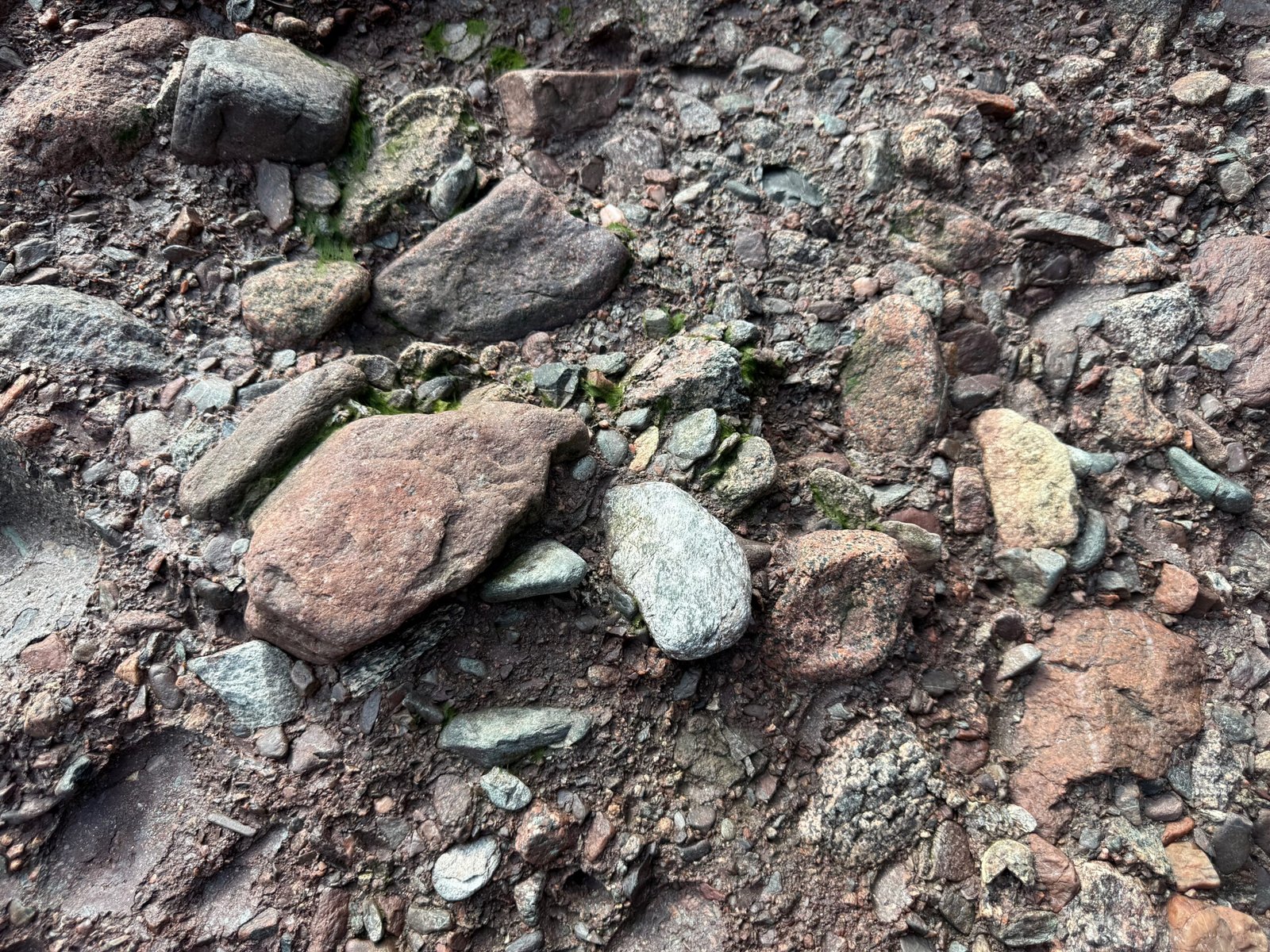
Every curve and crevice told a story, not just of millions of years of geology, but of a world still in motion, as the Bay of Fundy’s tides continue to carve and transform this remarkable shoreline.
8 Beyond the Stairs
Most visitors stop here, content to marvel at the main cluster of rocks. But curiosity pulled me further. With hours before the tide’s return, I set off south along the shoreline, eager to see what else the ocean had revealed.
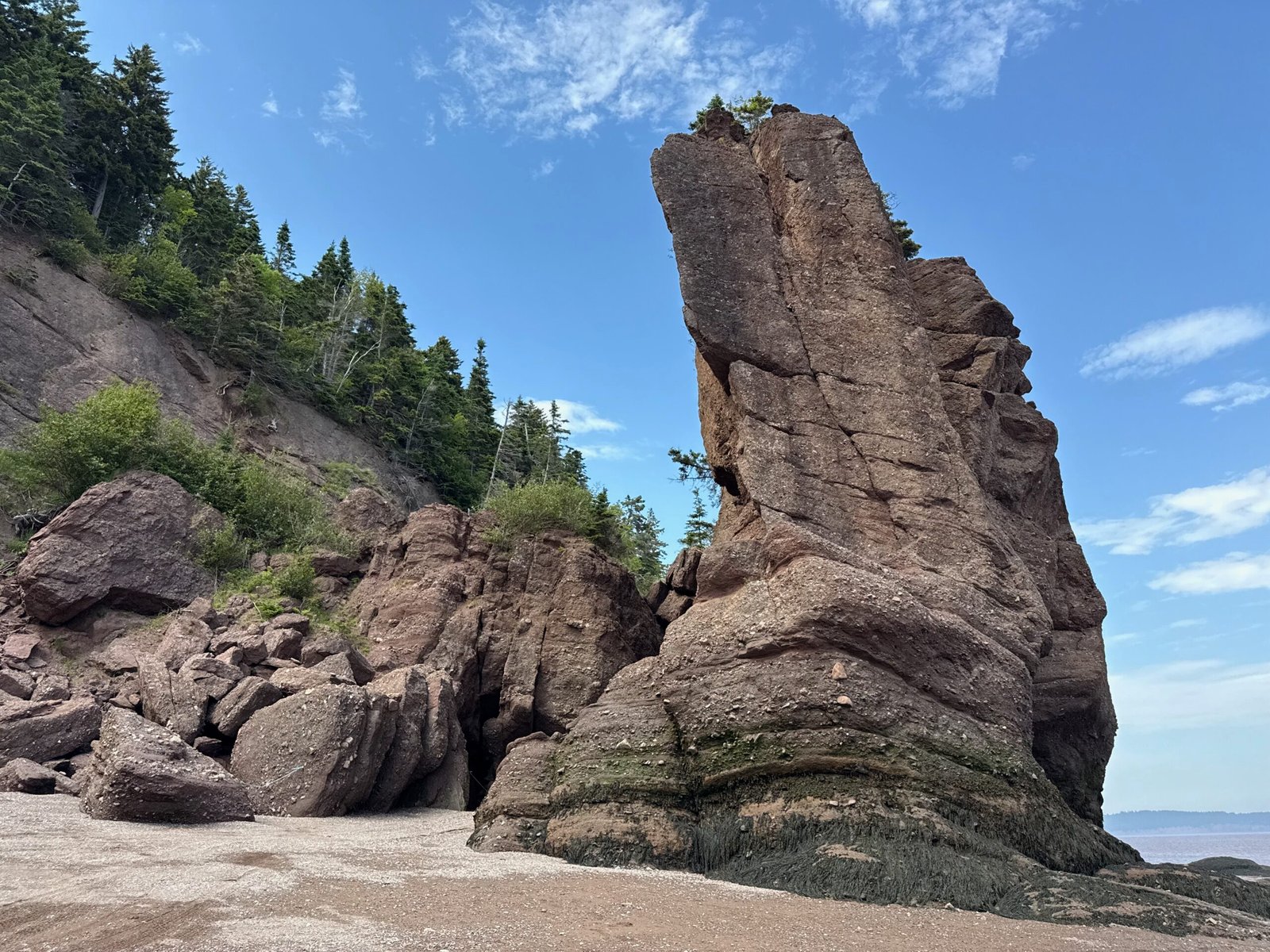
And what a sight it was – graceful stone arches framing the sky, sheer cliffs rising higher than I could have imagined, and solitary pinnacles scattered along the mud like forgotten monuments. Every few steps seemed to reveal something new, something even more photogenic and improbable than the last.
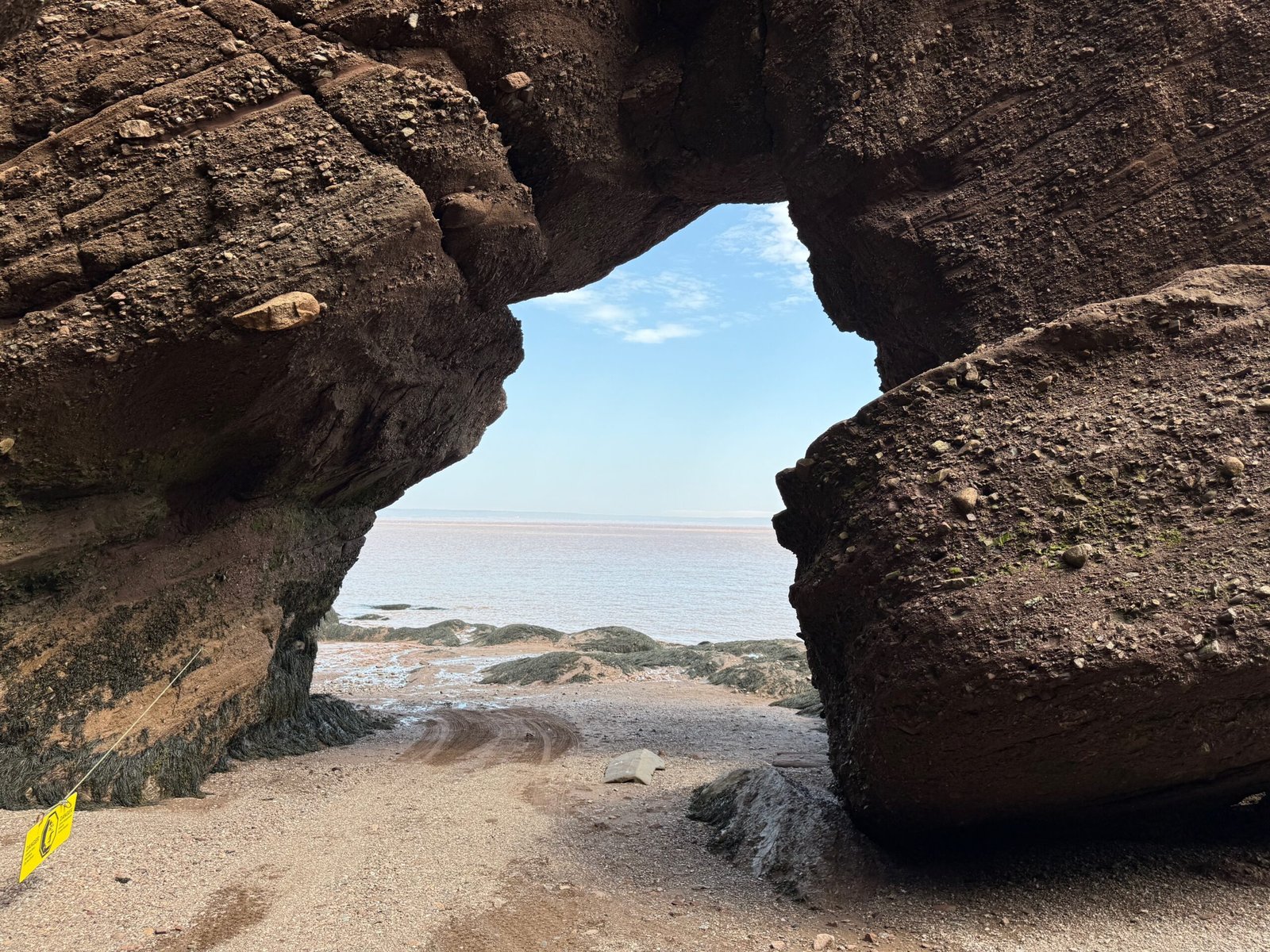
The ocean itself was a deep chocolate brown, rich with sediment carried by the tides and by the Petitcodiac River nearby. It was hard to believe this muddy, flat expanse would soon be swallowed by the sea again — as if it had never existed.
This distinctive color comes from the bay’s unique geology and extreme tides. Much of the shoreline is made of soft sedimentary rock, including sandstone, shale, and conglomerate, that crumbles under the relentless force of the Bay of Fundy’s tides. The Petitcodiac River adds to the mix, delivering vast amounts of fine silt from upstream.
Twice a day, the world’s highest tides churn this material, keeping it suspended in the water. The process has been millions of years in the making, intensified by glacial deposits left behind at the end of the last Ice Age. The result is a bay perpetually rich with sediment, giving it that unmistakable chocolate-brown hue.
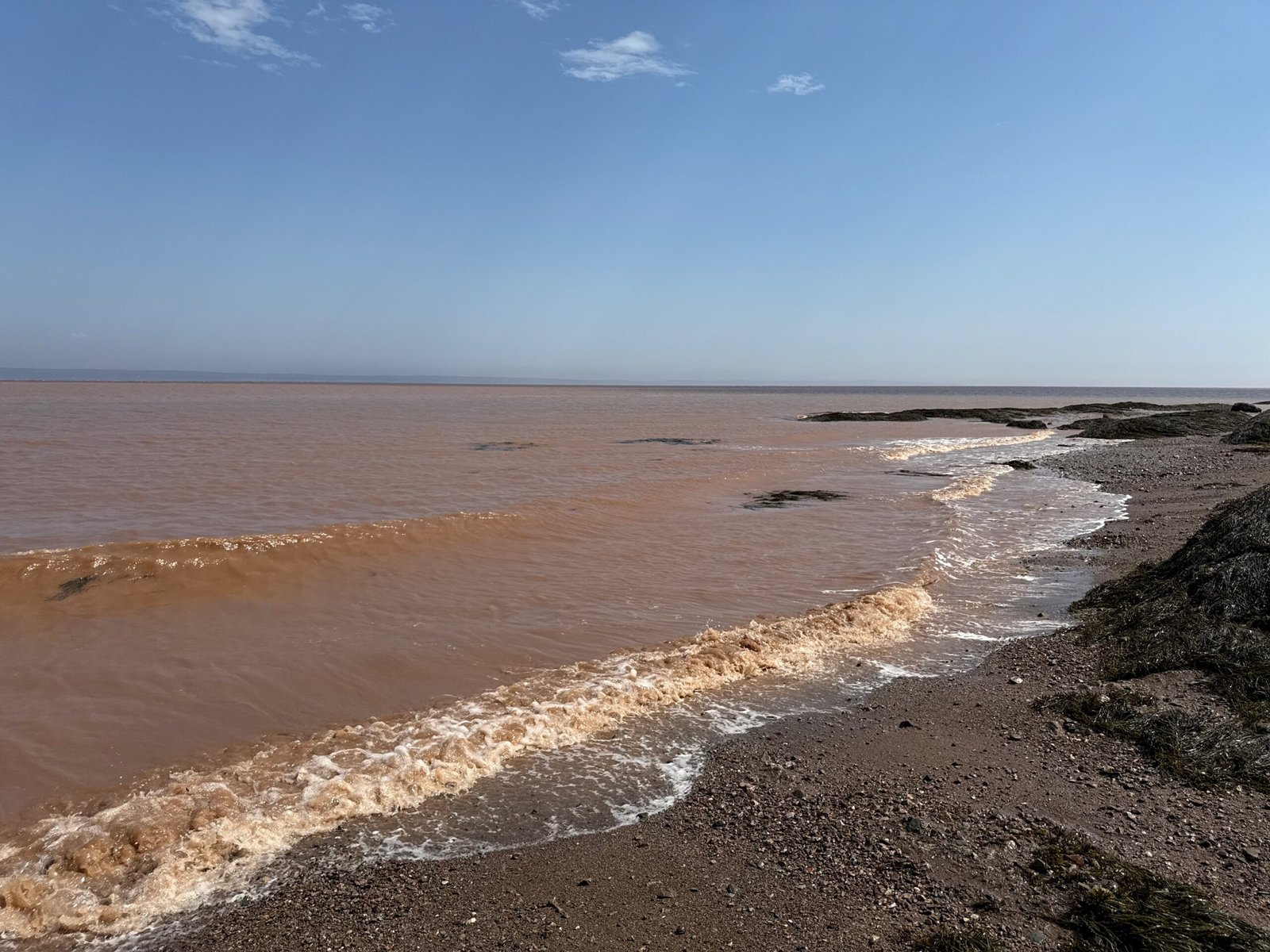
Standing there, I thought about the Joggins Fossil Cliffs, just 15 kilometres across the bay. Their rocks are full of ancient fossils, and I wondered if anything similar could be hiding here, waiting for a careful eye to find it.
9 To the North and Beyond
Not yet ready to leave, I turned and walked north, where the mudflats stretched impossibly far toward the horizon. Here, too, the shoreline offered surprises — more clusters of pinnacles, islands of rock marooned in the mud, and the sense that I’d stepped into another world.
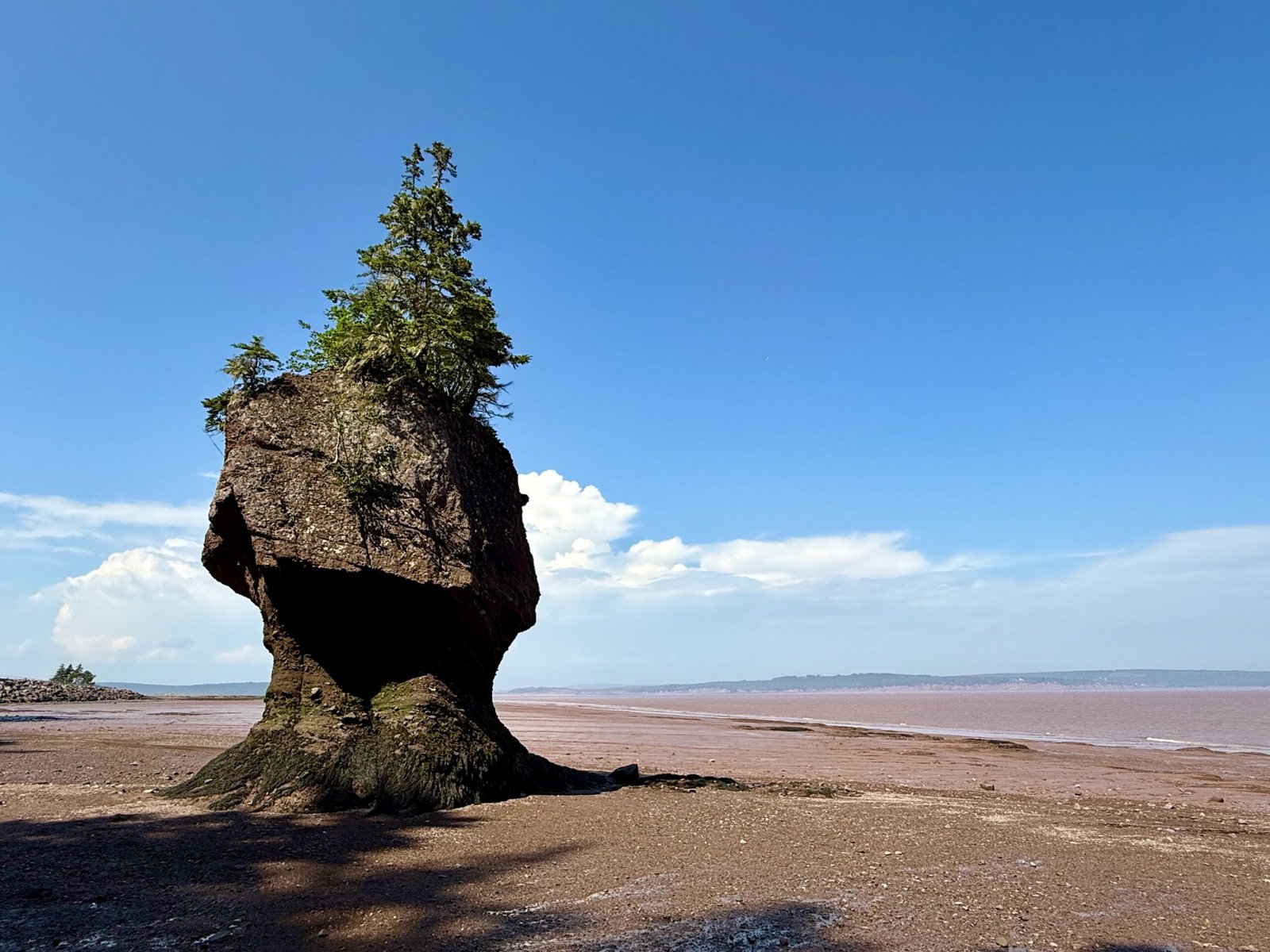
This was the Bay of Fundy at its most honest: vast, wild, and indifferent to human schedules.
10 Practical Travel Tips
These simple but essential tips will help you make the most of your visit to the Hopewell Rocks, ensuring a safe, comfortable, and unforgettable experience.
- Tide Schedule: Always check the tide schedule before you go. To walk on the ocean floor, you must arrive at low tide.
- Footwear: The mud is thick, sticky, and slippery, so wear waterproof or washable shoes you don’t mind getting dirty.
- Time to Explore: Give yourself at least a couple of hours to fully enjoy both the beach and the visitor centre exhibits.
- Bring Supplies: Pack water, a snack, and even a small towel, especially on hot days, and to clean muddy hands or shoes.
- Accessibility: If walking the trail isn’t ideal, use the shuttle cart from the visitor centre to the stairs for easier access.
11 Pro Tips for the Science Traveler
For those who crave more than just a beautiful view, these science-focused tips will help you uncover the deeper stories written in the rocks, tides, and mud of the Bay of Fundy.
- Study the Layers: Look closely at the rocks, as each layer and pebble tells a story of rivers, glaciers, and time.
- Visit the Exhibits: Learn how the Bay of Fundy formed as a rift valley and how these unique formations came to be in the visitor centre.
- Watch the Shapes: Notice how the “flowerpot” formations evolve over time – erosion is ongoing and visible if you know where to look.
- See Both Tides: If you can, come back at high tide too, as the transformation is breathtaking and shows the full power of the bay.
- Record Your Observations: Take notes and lots of photos. You never know what subtle details you’ll spot later when you reflect on your visit.
12 Back to the Visitor Centre
Eventually, with the tide beginning its slow return, I climbed back up the stairs and wandered into the visitor centre to learn more about what I’d just experienced.
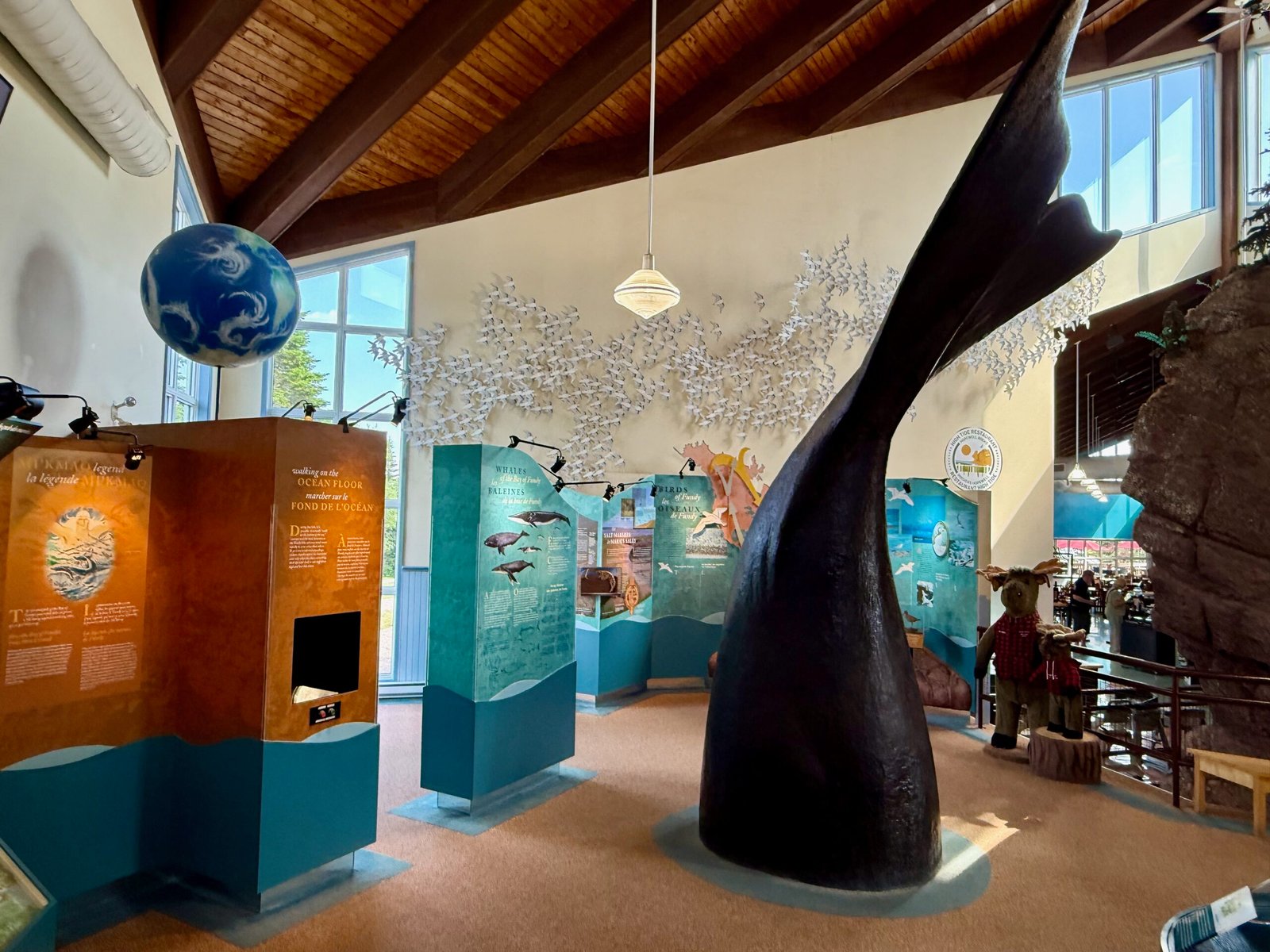
I read about how the Bay of Fundy began as a rift valley eons ago, and how the rocks beneath my feet had been laid down by ancient rivers before being uplifted, cracked, and sculpted by relentless erosion. Displays explained how the tides funnel into the narrow bay, amplifying their height to record-breaking levels.
Before leaving, I stopped at one of the lookouts, where the Caledonia Mountains rolled down to meet the water. The bay stretched out before me, the muddy flats gleaming under the afternoon sun, and I imagined what this place looked like millions of years ago as a river delta teeming with life, the seeds of these rocks just beginning to form.
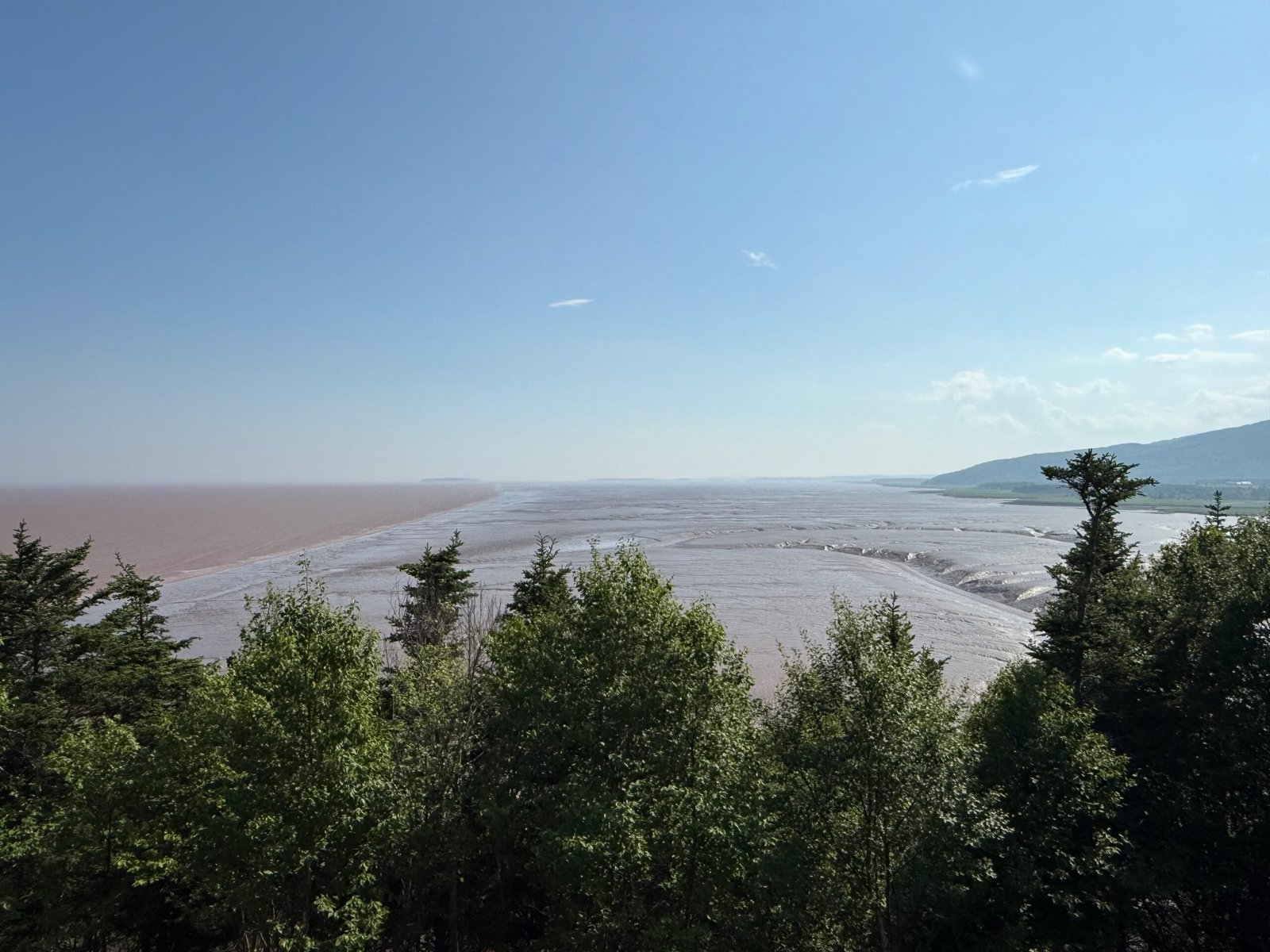
Someday, I thought, I’ll come back again, because this place is never the same twice.
13 More Bay of Fundy Adventures
If you enjoyed this article, explore these other science travel stories from around the Bay of Fundy: